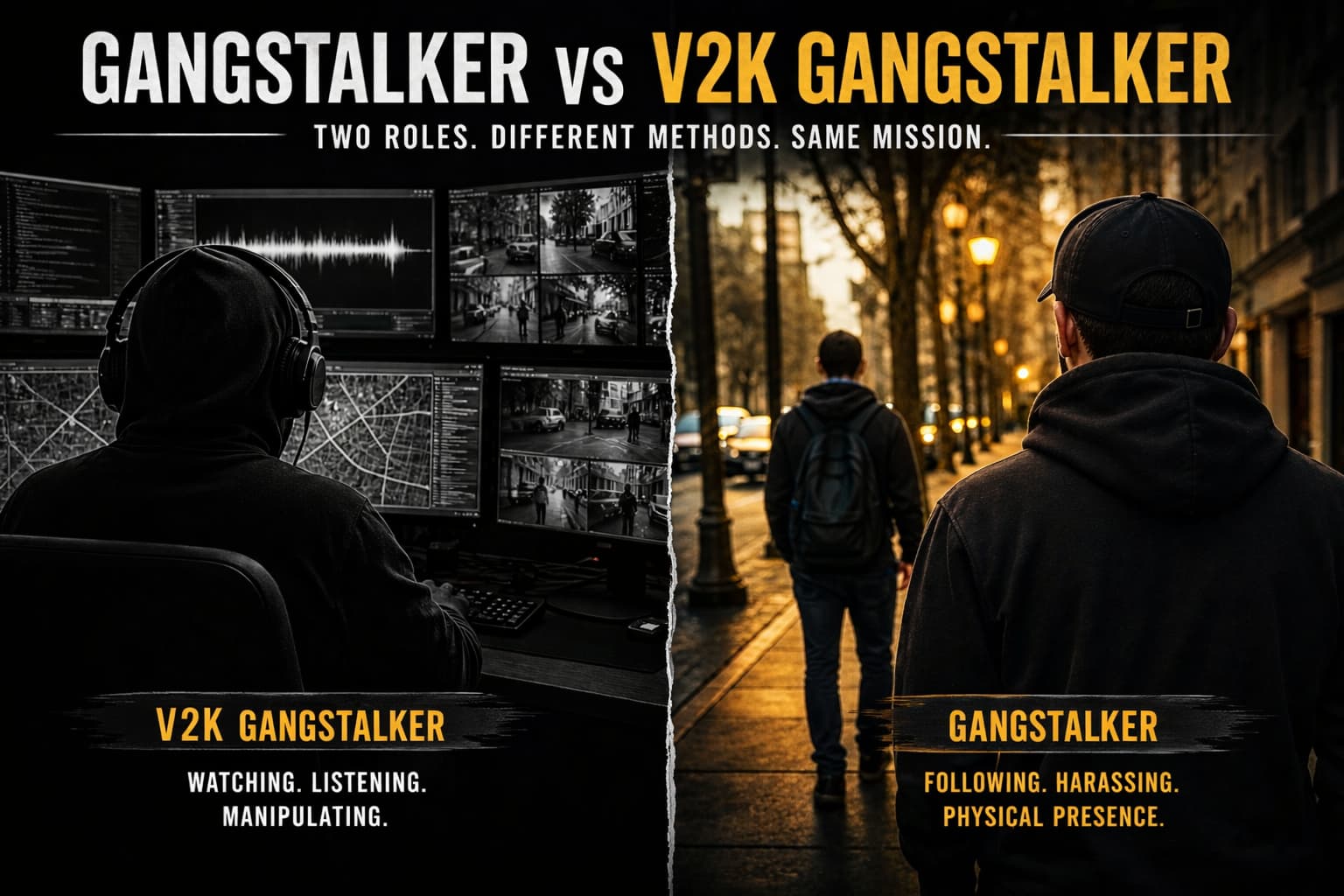
What’s The Difference Between GangStalker and V2K GangStalker?
You’ve probably read me using these terms back and forth. Sometimes I say GangStalkers, other times I say V2K GangStalkers. They both are really different meanings based on their job duties. So I’m going to break down the difference between the two, so for future reference you will understand why and which I’m referring to.

- The operator behind the “voices” most Voice To Skull victims are listening to.
- Usually prefers to stay inside.
- Talks and watches everything you do.
- Tries to manipulate your mindset or health.
- Basically the push-button guy.
- The ones usually following you around.
- Harassing you in one form or another.
- Standing around or showing up physically.
- More of a physical presence than a behind-the-scenes operator.
Now some GangStalkers are V2K operators as well. The first set are the ones who are learning the follow-me game before they move up to V2K. These types might continue to Stalk and V2K.

The reason why some can’t do both is because of their “discomfort” with looking at a Victim Target whom they have seen naked one hundred different ways and some. They can’t hold their face. They have a tendency to hide their face when they see the Target — since the Target is the camera. (Ocular Connection). If they’re working near or with the Target, they will try not to be around as much as possible.

This Is Soooo Confusing
This is soooo confusing because they’re the ones Following The Target around. So you can see how that could pose a problem in their “normal” front called life. That and their “Operation”.
I mean if you’re going to watch someone in person then follow them around — get over the weirdness and be able to look at them.
FAQ
The operator behind the voices most Voice To Skull victims hear. They stay inside, watch everything remotely, and try to manipulate the target’s mindset or health — the push-button operator.
The physical presence — following the target around, showing up in their environment, standing around, or harassing them in person in one form or another.
Discomfort with being physically near someone they’ve surveilled through ocular connection. They can’t hold their face — they tend to hide when they see the target, which is an obvious problem for physical stalking.